Different nutrients, different roles
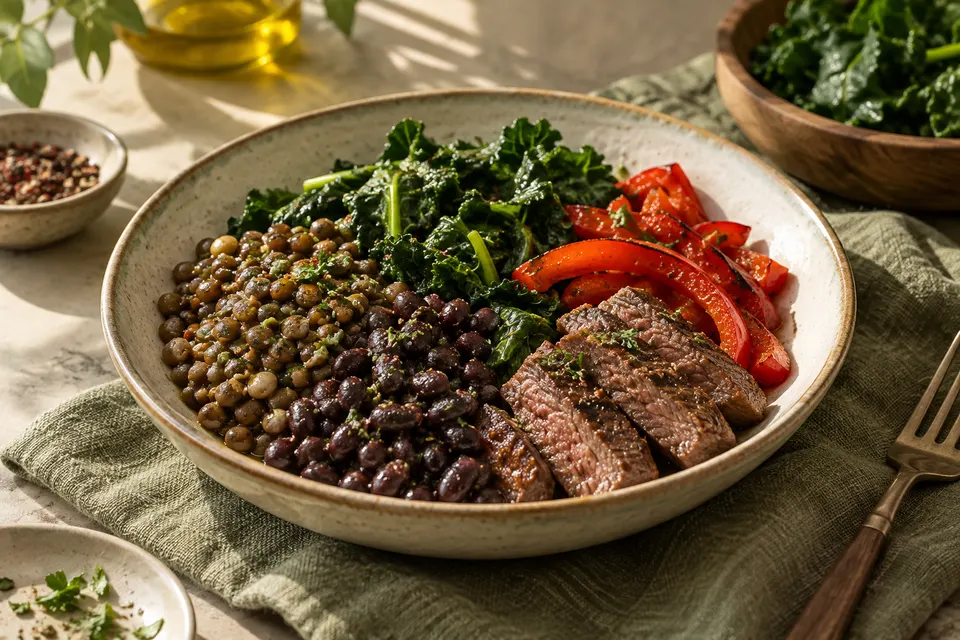
Protein supports the building and maintenance of tissues. Carbohydrate and fat contribute energy, as does protein. Foods often contain several macronutrients: beans are not simply “protein”. Putting each food into a single box can hide this complexity.
From grams to energy
A simplified calculation uses about 4 kcal per gram of protein, 4 for carbohydrate and 9 for fat. A meal with 25 g protein, 60 g carbohydrate and 20 g fat supplies about 520 kcal. Fibre, rounding and labelling conventions can explain differences from package values.
There is no perfect split for everyone
EFSA reference values support assessment of populations and groups; they are not individual prescriptions. Age, activity and health matter. An online percentage does not establish your personal protein needs, and a worked example should not become a diet recommendation.
Put the numbers into meals
Look at the foods behind the totals: wholegrains, vegetables, fruit, pulses and varied protein sources help you build variety. Start with recipes you can prepare and portions appropriate to your circumstances. Macro tracking should help you navigate choices rather than make every meal inflexible.