Why do recommendations mention 25 or 30 grams?
WHO recommends at least 25 g of naturally occurring dietary fibre daily for adults; the UK reference reported by the NHS is 30 g. These population recommendations have different contexts. They are not amounts to add together or a daily pass-or-fail test.
Spread sources across meals
Whole grains, pulses, vegetables, fruit and nuts provide different opportunities to eat fibre. One fortified bar does not make a varied diet. Start by finding a regular meal that lacks a plant food and try one manageable change, rather than redesigning everything you eat at once.
A worked label comparison
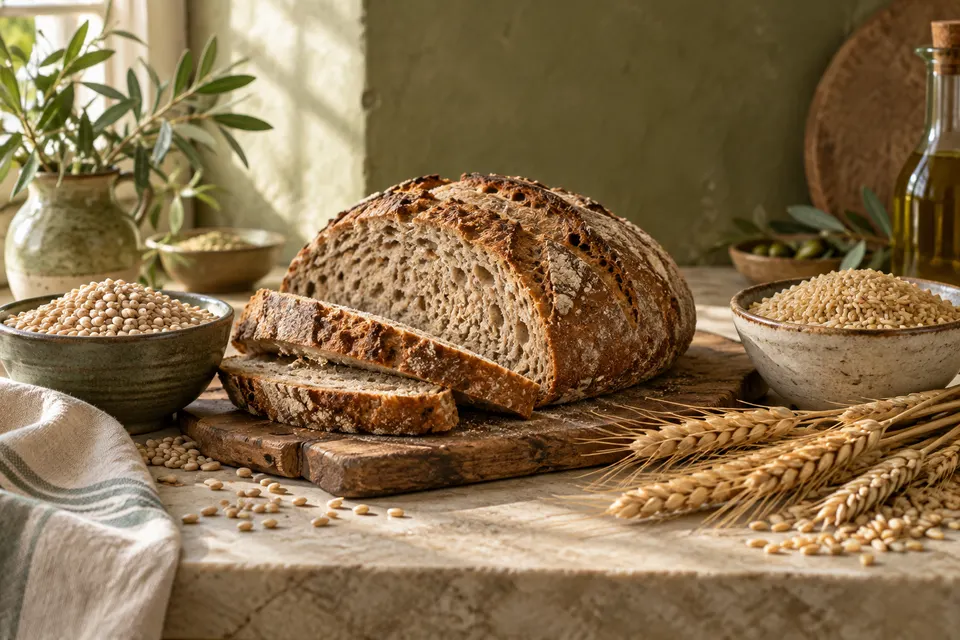
Illustrative example: bread contains 6 g fibre per 100 g. Two slices weighing 70 g together provide about 4.2 g: 6 × 70 ÷ 100. Compare breads using the same weight, because slices differ between products. Grams of fibre are not grams of bread.
When to adapt the advice
A sudden large increase may be uncomfortable, so make changes gradually and pay attention to fluids. If you already follow advice for a bowel condition, do not replace it with a generic target. Persistent pain or major bowel changes need assessment, not an automatic addition of bran.