Start with the week you actually have
Mark meals out, busy evenings and how many people will be eating. Check the fridge, freezer and pantry before choosing recipes. EPA recommends planning meals and organising shopping. The ideas below are our practical examples, not a prescribed diet.
Build a flexible structure
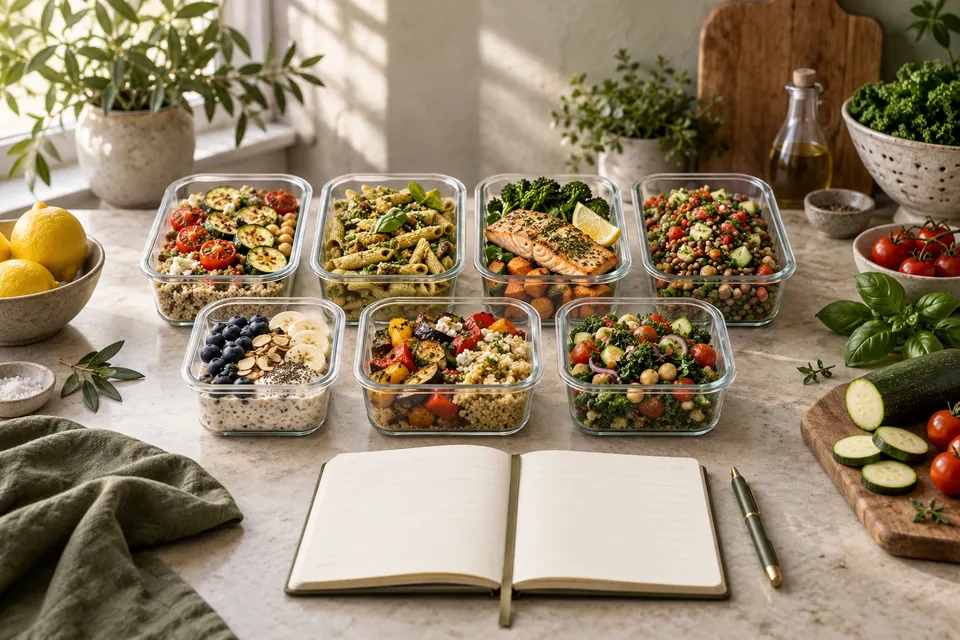
Choose a few recipes that share ingredients and leave room for changes. For example: chickpeas with grains and vegetables on Monday, an omelette with vegetables on Tuesday, and pasta with beans on Wednesday. Adjust ingredients and portions to individual needs; variety matters more than a rigid list of “perfect” foods.
Turn recipes into shopping quantities
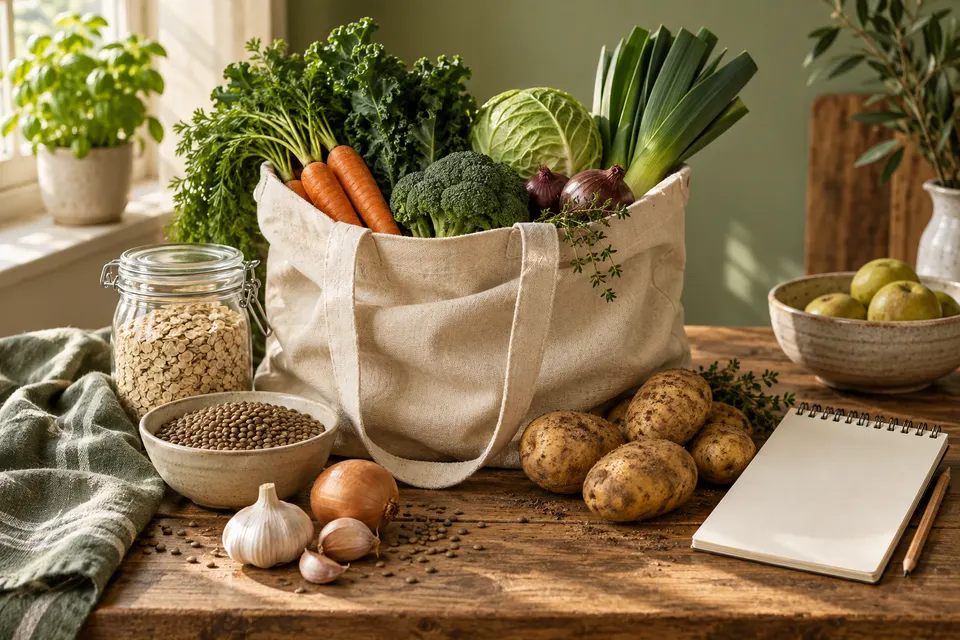
Add repeated ingredients and subtract what you already have. Two recipes need 150 g and 200 g of cooked chickpeas. With 100 g in your fridge, you need another 250 g. Do not combine dry and cooked weights without conversion. Group the remaining ingredients by store section.
Review instead of starting from scratch
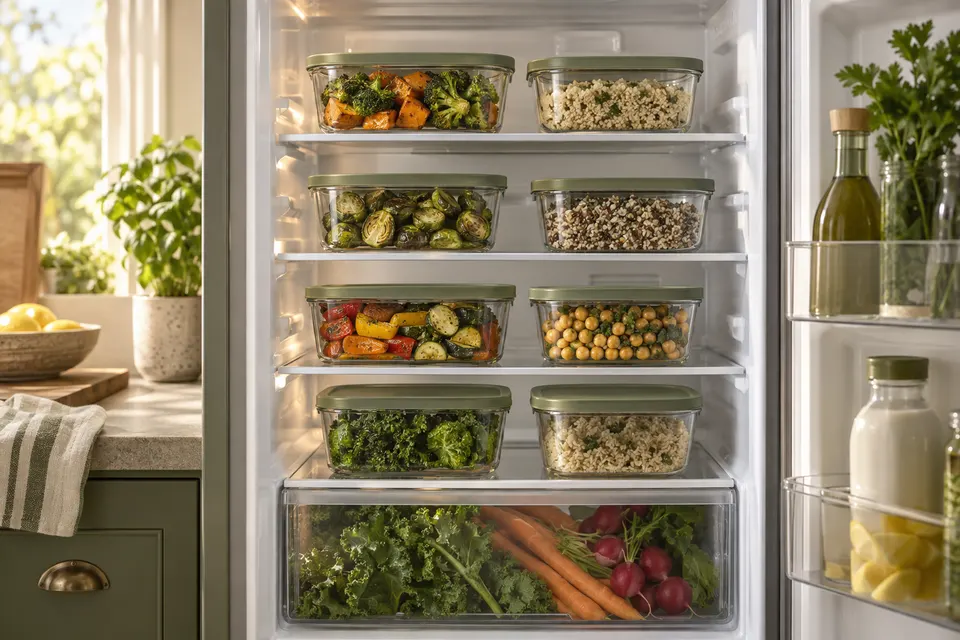
Check which foods need using first and follow their storage instructions. At the end of the week, note what you actually cooked. Nutryfit connects recipes and a grocery list to your plan, with meal swaps when schedules change. Planning is an organisational tool, not a clinical nutrition assessment.