What changes compared with refined grains?
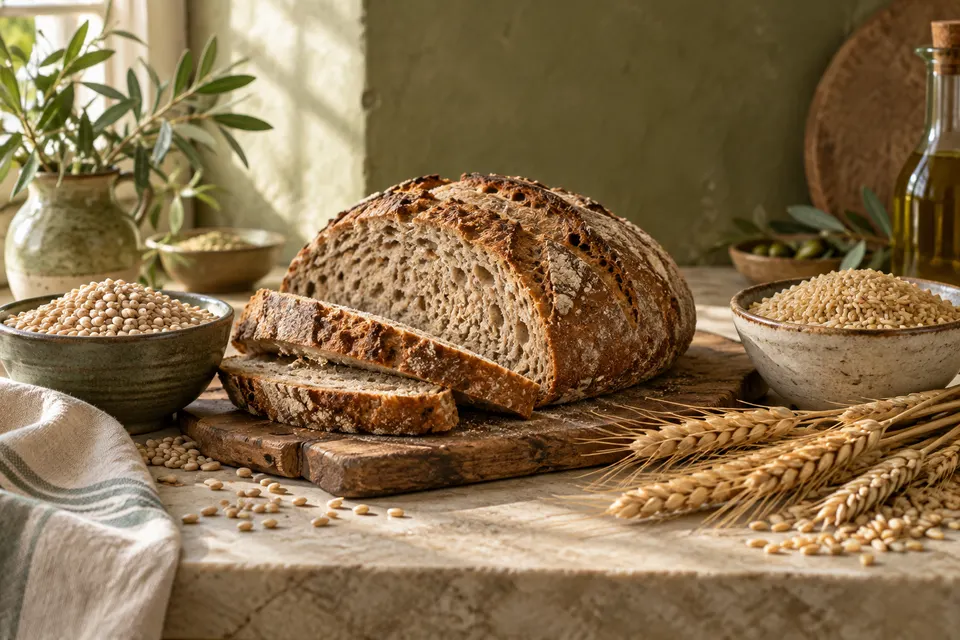
Wholegrain versions of bread, pasta and other cereals are generally useful choices for increasing fibre. They still provide energy. The NHS includes them within a balanced diet; choosing them does not require banning every refined product or treating one ingredient as the answer to your whole diet.
Look beyond the product name
For a practical comparison, look for wholegrain flour in the ingredient list and compare fibre per 100 g when available. A seeded product is not necessarily entirely whole grain. Check salt and sugars too: a word on the front does not describe the complete nutritional profile.
Try one substitution
Planning example: keep your usual pasta sauce and try wholewheat pasta; at another meal, choose brown rice with vegetables and chickpeas. Check cooking times before scheduling a quick dinner. You do not need to replace every grain in the same week to learn which options work for you.
Dry weight and cooked weight
When logging quantities, choose a food entry matching the state you weighed. Cooking changes water content and weight: 100 g dry pasta is not equivalent to 100 g cooked pasta. For a shared recipe, you can record the total dry amount and then divide the prepared dish into portions.